
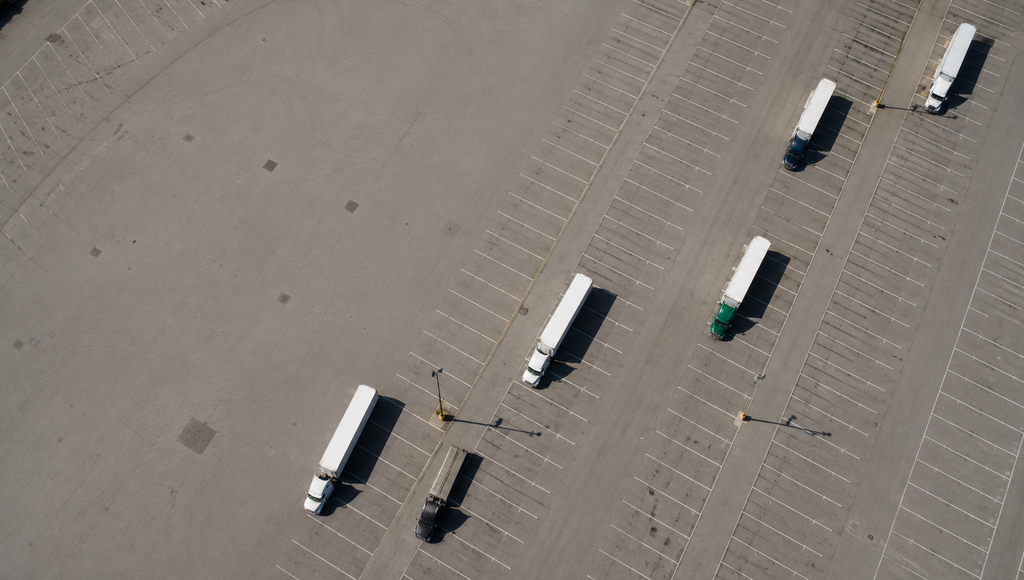
Here is something we have watched happen in slow motion from the brokerage desk this year. A shipper calls around for capacity the way they always have, expecting the same long list of carriers and brokers to pick from. The list is shorter now. A handful of the names they used to call got bought out by bigger players, a couple more quietly went under, and the ones still standing do not scrap for the freight the way they once did. The lanes those trucks used to run smooth are clogged now too, in ways that pile on hours and cost that were not there a while back.
Most shippers have not put a name to it. Their world is getting smaller, though, and it is happening on more than one front while they are looking the other way.
The obvious one is that there are fewer people left to hire. The quieter one is that the roads those people drive keep getting worse to move on. Neither loosens up on its own. Both chip away at the same thing, which is the leverage a shipper used to take for granted, the ability to always find another truck and always find another way. Let me walk you through what is actually going on, because the shippers who catch it early keep their room to maneuver while everybody else watches it quietly vanish.
Direction One: The List of Names Is Getting Shorter
Start with the side you can almost feel on the phone, because it shows up the first time you go looking for a truck and come up short.
The freight recession ran long and it ran hard, and a lot of small carriers did not make it out the other side. Owner-operators and little fleets that spent years running below cost finally hit the wall, parked the trucks, and handed back the authority. Every one of those is a name that used to be on somebody's list and is not anymore. That is thinning happening from the bottom.
At the same time it is consolidating from the top. The bigger carriers and the bigger brokers have spent this stretch buying up the survivors, folding smaller operations into their own, because a down market is when the strong go shopping. So the field is shrinking from both ends at once. The little guys disappear and the big guys absorb what is left, and what you end up with is fewer, larger players holding more of the freight and feeling a lot less pressure to fight over yours.
That is the part that actually costs you. When there were a hundred hungry carriers scrapping for every load, you had leverage without ever thinking about it, because somebody always wanted the freight. Thin that field down to a handful of big players who are not desperate, and the leverage slides quietly to their side of the table. It is the same story I keep coming back to from different angles, a truck count that keeps shrinking no matter what the freight is doing, and this is one more road it travels down.
And it is not just trucks leaving. The paperwork is thinning the field too, because the tightening rules on who is even allowed to run are pulling more of the small operators off the road on top of the ones the market already took. Same direction, different push. The list of names keeps getting shorter.
Direction Two: The Roads Themselves Are Closing In
Now the side almost nobody connects to their freight bill, because it does not show up as a missing carrier. It shows up as a truck that takes longer to get where it is going.
The roads and bridges this freight moves on are old, and a lot of them are worn past the point of keeping up. Bridges get weight-restricted or lanes get closed for repair, and a truck that used to take the direct route now takes the long way around. Construction is everywhere at once. Congestion in and around the big freight hubs keeps getting worse, and a driver burns hours sitting in it that he used to spend rolling.
Here is why that hits your leverage even though it has nothing to do with how many carriers exist. Every hour a truck loses to a bad road or a jammed interchange is an hour it is not available to haul something. Effective capacity, the freight that can actually get moved in a day, shrinks even if the exact same number of trucks is out there. The lanes clog, the clock runs, and the pool of trucks that can realistically cover your load on time gets smaller without a single carrier going out of business. It is the quiet version of the same squeeze, and I have written before about how congestion at the freight hubs eats capacity a shipper never sees leave.
So you have two different forces, one you can name and one you cannot, both pulling the same direction. Fewer trucks in the pool, and the trucks that are left able to do less with their day. They stack.
Why the Two Together Are Worse Than Either Alone
This is the part worth slowing down on, because a shipper might shrug off either one of these by itself and completely miss what they do together.
Fewer carriers you could maybe handle if the roads were clear, because you would lean harder on the ones left and still get covered. Bad roads you could maybe handle if there were carriers everywhere, because somebody would always have a truck positioned close enough to make it work. The trouble is you have got both at the same time. A shrinking pool of carriers, each one able to cover less ground in a day than they used to. The two problems multiply instead of add.
And here is the sharp end of it. When a load falls through in a market like this, your fallback is worse than it used to be on both counts. Fewer carriers means fewer backups to call. Worse roads means the backups you do reach are further out and slower to get there. The safety net a shipper always counted on, the certainty that there is another truck and another way, is fraying from two directions at the same time. That certainty was the leverage. Losing it quietly is how a shipper's leverage disappears without a single dramatic moment to point at.
What to Do While You Still Have Room
None of this is a doomsday call. It is a call to act while you still have the room to, because the shippers who see this early can do something about it and the ones who wait cannot.
Start by widening your carrier base on purpose, before you need it. The instinct when the list gets short is to lean on the one or two names that always come through, and that feels safe right up until one of them gets bought or bows out and you are suddenly a name short with no backup. Go build relationships with more carriers than you think you need, deliberately, in the calm months. Depth on a lane is the whole defense against a shrinking field, and you cannot build it in a panic the morning a load falls through.
Then give the roads the respect they are demanding. If a lane runs through a worsening bottleneck, plan for it. Build the real transit time into your schedule instead of the one that worked three years ago, tender it with enough runway that a carrier can route around the mess, and stop treating a clogged corridor like it is still the clean shot it used to be. The congestion is not going away, so the plan has to bend around it.
And lean on the relationships harder than ever, because in a market with fewer players and worse roads, who you know is most of what is left. The shipper with real, deep carrier relationships still gets the truck when the field is thin, and the shipper carriers actually want to haul for gets covered while the one working a shrinking list of strangers gets left holding the load. In a shrinking market, being the freight people want to run is not a nicety. It is the leverage you have left.
This is also where a broker earns the name, and I will say it plainly because it is the honest version. When your own list of carriers gets short, ours does not have to. Part of what we do is carry a deep, vetted bench of carriers across a lot of lanes, exactly so that when your options shrink, you can borrow ours. A shipper's world getting smaller is a lot less dangerous when the partner booking the freight has a bigger one to pull from.
The Bottom Line
Your options are getting squeezed from two directions at the same time, and most shippers have only noticed one of them if they have noticed either. The carrier list is getting shorter as small operators fold and big ones swallow the rest, and the roads are getting worse as old infrastructure and rising congestion quietly eat into what the trucks that remain can actually do. Neither fixes itself. Together they chip away at the one thing a shipper used to be able to count on, that there is always another truck and always another way.
The good news is that this is slow, which means you have time to get ahead of it if you move now. Widen your carrier base before the list gets shorter still. Plan your lanes for the roads as they actually are. And put real work into the relationships that keep you covered when the field is thin, because those are what hold when everything else is shrinking. The shippers who do that keep their room to maneuver. The ones who wait wake up one day with nowhere left to turn and no idea when it happened.
That squeeze only gets worse when the import surge at the coast starts pulling capacity off your inland lanes.
Want a deeper bench behind your freight while the market keeps shrinking? Let's talk about widening your options before they narrow further.
📞 (931) 200-5601 | nfc@nationalfreightconnection.com
This one drew on 2026 reporting from FreightWaves and the Journal of Commerce on carrier failures through the freight recession and the wave of consolidation among larger carriers and brokers, along with FTR and ACT commentary on small-fleet exits and the shrinking pool of operators. The infrastructure side leaned on the American Society of Civil Engineers infrastructure assessment, the American Transportation Research Institute's work on congestion cost and bottleneck locations, and Department of Transportation reporting on bridge conditions, with capacity-impact framing from Transport Topics and desk observation on how both forces compound.